



Cleanr to launch stainless-steel straw filter targeting microplastics in reusable bottles

Key takeaways
- Cleanr is developing the Cleanr Sip, a stainless-steel straw filter designed to reduce microplastics and other contaminants in reusable water bottles.
- The filter claims to remove more than 99% of microplastics while also reducing contaminants such as PFAS, pharmaceuticals, heavy metals, and chlorine.
- The launch comes amid growing concerns about microplastic exposure from bottled water and packaging.
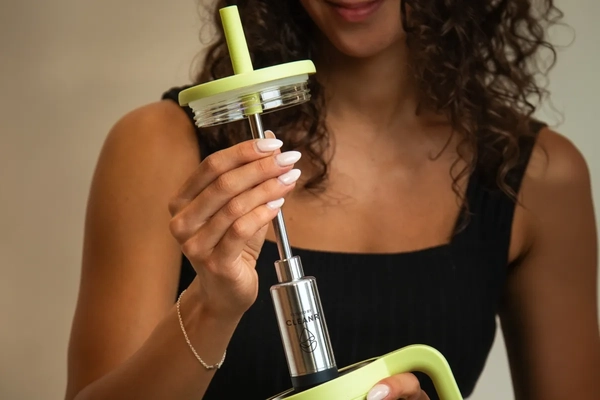
Cleanr is preparing to launch a stainless-steel straw filter designed to reduce microplastics and other contaminants in reusable water bottles.
The filter can fit into reusable bottles and uses a vortex system, inspired by the way manta rays eat microscopic plankton. The design is said to remove smaller particles than other filters on the market. It also removes chlorine, which can improve taste.
Max Pennington, CEO at Cleanr, tells Packaging Insights: “We designed the Cleanr Sip to be used with the bottles consumers already have and as an upgrade to provide great tasting and healthy water on-the-go.”
“The Cleanr Sip removes more than 99% of microplastics and reduces other harmful contaminants such as PFAS, pharmaceuticals, and heavy metals while making your water taste great.”
Improving water taste and quality
The Cleanr straw is made from stainless steel and includes a sizer so it can fit different bottles. Pennington shares that the toughest engineering challenge is to provide an easy drinking experience with extended filter longevity.
“We were able to solve the challenges with Cleanr’s patented Vortx technology, inspired by the way fish feed, that enables tiny particle capture with natural filter self-cleaning properties. Vortx enables the microplastics filtration efficiency and maintains a good drinking experience with high filtration efficiency.”
 Max Pennington, CEO at Cleanr.The Cleanr Sip, expected to hit the market before the end of the year, is said to greatly limit consumers’ microplastics exposure, “cutting down by 35 times on single-use plastic waste.”
“Microplastics are everywhere, in 94% of US tap water, in all single-use plastic water bottles tested, and in every part of the body. Microplastics have been linked to serious health consequences like cancer, heart attacks, and infertility.”
Previously, researchers identified seven common plastics in three popular bottled water brands in the US, including PET, polyamide, polystyrene, polyvinyl chloride, and polymethyl methacrylate. The study raised questions about the micro and nanoplastics’ potential impact on human health.
Last year, US researchers detected increasing concentrations of microplastics in human brain tissue. The study found that individuals diagnosed with dementia had up to ten times more plastic in their brains compared to those without the condition. Despite the study not proving causation, there is a clear indication of correlation, said the researchers.
Earlier this year, the US Department of Health and Human Services agency launched a nationwide US$144 million microplastics research program. It aimed to create a toolbox for measuring, researching, and affordably removing microplastics and nanoplastics from the human body.
Recently, a white paper released by experts at the University of Technology Sydney Business School, Australia, urged businesses to respond to scientific evidence and consumer awareness of the potential harms associated with microplastics.